
 Bedroom Design
Bedroom Interior Design in Hyderabad: Storage, Lighting and Comfort Ideas (2026)
By Interiorji Design Team • August 30, 2026
A bedroom has a simpler job than most rooms: support good sleep, dressing and the start and end of each day. Yet bedroom designs often become crowded with oversized headboards, glossy wardrobes, display shelves and ceiling patterns. For Hyderabad homes, comfort also depends on managing afternoon heat, dust, air-conditioning, monsoon humidity and storage for clothes used across seasons.
This guide approaches bedroom interior design in Hyderabad from the inside out—beginning with movement and storage, then adding lighting, materials and visual character.
Start With Bed Position and Clearances
Place the bed before designing the wardrobe or television wall. Check the actual mattress dimension, frame thickness and headboard depth. A king-size mattress may fit, while the complete bed frame leaves narrow passages or blocks a wardrobe shutter. Aim for comfortable movement on both sides where the room allows, and protect the route between the entrance, wardrobe and bathroom.
Do not position the bed only for symmetry if that creates poor air-conditioning flow or direct glare from a window. Check door swings, curtains and sockets. If vastu preferences matter to the household, discuss them at this stage when bed orientation and wardrobe walls can still be adjusted without compromising function.
Choose the Right Bed, Not the Largest Bed
A bed should suit the people and the room. A queen bed can make a compact bedroom more comfortable than a king bed squeezed against two walls. Upholstered frames soften the space but collect more dust and require fabric care. Timber and laminate frames are easier to wipe. Low platform beds look sleek but may be uncomfortable for older adults.
Hydraulic storage uses the full bed footprint for occasional items but requires lifting the mattress platform. Drawers are easier for regular access if there is space to open them. A bed without storage improves cleaning access and can make the room feel lighter. Select based on what will actually be stored.
Wardrobe Planning Begins With an Inventory
Count long garments, shirts, folded clothes, drawers, shoes, bags and suitcases before dividing the wardrobe. Generic equal shelves often waste vertical space. Double-hanging sections can increase capacity for shorter clothing, while a full-height section handles dresses and coats. Internal drawers keep accessories visible; open shelves at eye level support daily folded items.
Hinged shutters give full visibility and are generally straightforward to maintain. Sliding doors save opening clearance, but one part of the wardrobe always remains covered and tracks need cleaning. Choose sliding only when the room benefits from it. Full-height wardrobes use the wall well, though lofts should hold light, infrequent items rather than heavy suitcases that are difficult to lower safely.
Create a Useful Dressing Area
A dresser does not require a bulky cabinet. A mirror with a shallow drawer and small ledge can hold daily items without narrowing the passage. Provide flattering front or side lighting rather than relying on a ceiling downlight that creates facial shadows. If the mirror faces the bed and that is uncomfortable for the household, mount it inside a wardrobe shutter or position it on a side wall.
Place a socket for a hair dryer or trimmer where the cable will not cross a walkway. A small upholstered stool can tuck under the ledge, preserving floor space.
Design a Headboard Wall With Restraint
The bed wall naturally attracts attention, so it does not need several competing features. Paint, wallpaper, a compact upholstered panel or a simple timber frame can each work. Extend a headboard only when the proportions suit the wall and bedside tables. Deep grooves and edge-lit panels photograph well but can trap dust and complicate repairs.
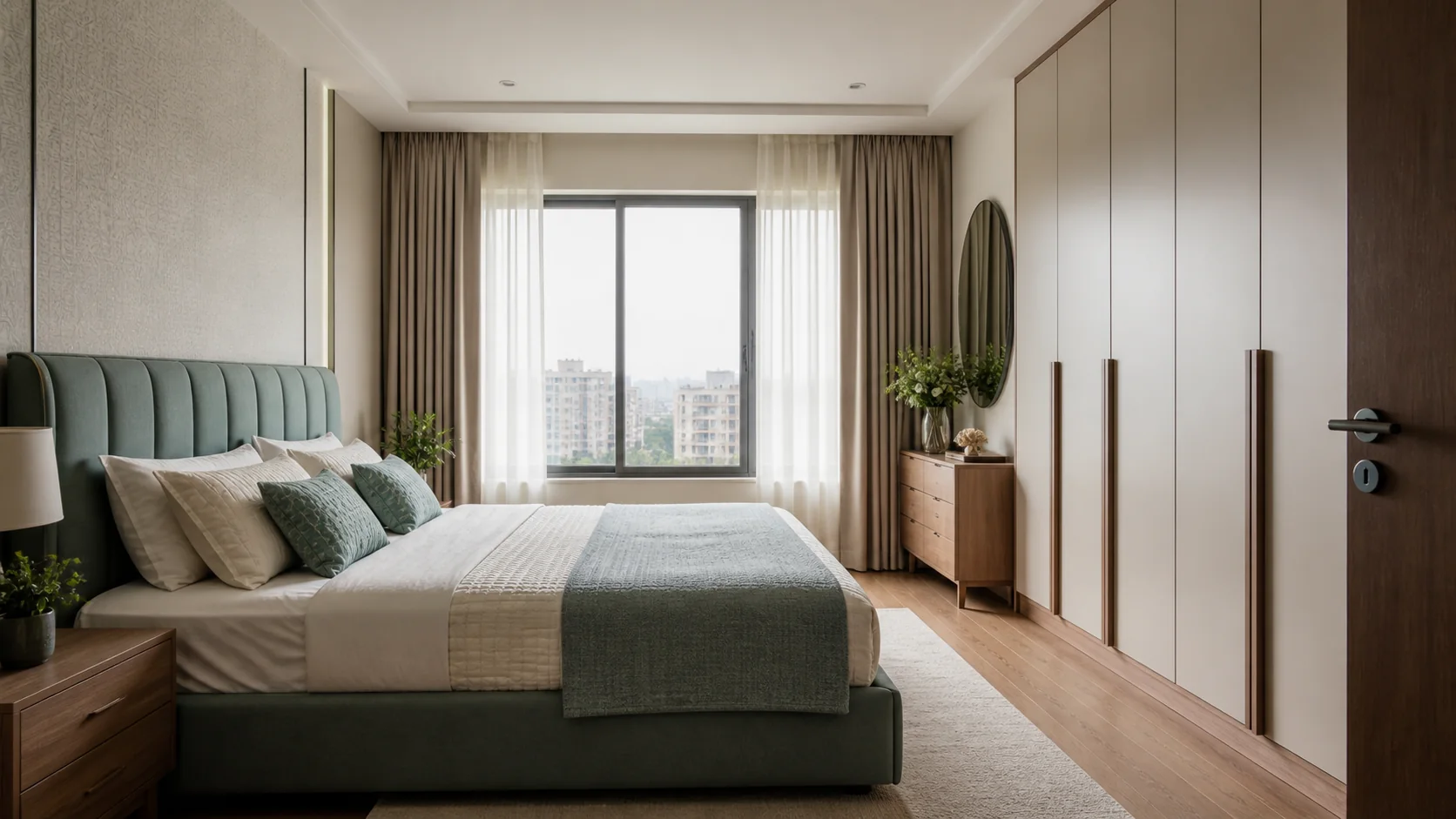
For a calm room, select one main texture and repeat its colour elsewhere in smaller details. A muted teal headboard might connect to a cushion or artwork; warm wood can repeat in wardrobe handles or a study ledge. This is enough to create intention without making the room thematic.
Use Layered Bedroom Lighting
Bedrooms need bright light for cleaning and dressing, plus softer light for winding down. Put these functions on separate switches. General ceiling light can be paired with bedside reading lights, wardrobe lighting and a gentle indirect source. Avoid placing strong downlights directly over the pillow where glare is unavoidable.
Two-way switching near the bed is a small decision with daily value. Add reachable charging points on both sides and decide whether reading lights should be wall-mounted or part of the bedside table. Warm white light usually supports a restful mood; neutral light near the dresser can improve colour accuracy.
Respond to Hyderabad Sun and Heat
West-facing bedrooms can hold heat into the evening. Layer sheer curtains with lined blackout curtains or suitable blinds, and close gaps that admit harsh light. Light wall colours reduce visual heaviness, but thermal comfort depends more on glazing, shading, ventilation and air-conditioning than paint alone.
Keep the air-conditioner throw away from the face where possible and leave service access. Do not hide indoor units inside decorative boxes that restrict airflow. A ceiling fan remains useful through much of the year, so coordinate false-ceiling features around real blade clearance.
Materials That Are Easier to Live With
Matte wardrobe laminates hide fingerprints and minor surface variation. Dark high-gloss finishes can make a strong accent but reveal dust quickly. Veneer creates natural warmth and variation; painted finishes offer colour freedom but should come with clear repair expectations. Ask for low-odour, appropriate interior paints and allow new work to air before occupation.
For floors, use rugs to add softness without covering the room wall to wall. Select washable or serviceable fabrics for curtains and upholstery. In homes sensitive to dust, reduce deep tufting, open display shelves and hard-to-reach decorative ledges.
Compact Bedroom Strategies
In a small room, continuity matters. Use one wardrobe wall rather than several broken cabinets. A wall-mounted desk can double as a dresser. Bedside ledges may replace full tables. Keep the window area visually open and use curtain tracks close to the ceiling. Mirrors can extend sight lines when they reflect daylight or a clean surface.
Avoid making every object foldable. Moving mechanisms add cost and effort; if the room serves one primary function, well-scaled fixed furniture can be simpler. When a guest room must also be an office, a daybed or regular bed with a work desk often outperforms an elaborate wall bed in value and maintenance.
Children's and Parents' Bedrooms Need Different Details
For children, keep fixed furniture adaptable. Use replaceable colour, art and textiles for personality. Anchor tall units, soften exposed corners and provide reachable storage. Plan a proper study surface and cable management before devices arrive.
For older parents, prioritise an easy bed height, non-slip floor, clear walking route and switches within reach. Provide a night light between bed and bathroom. Avoid low benches, loose rugs and projecting shelves in circulation paths. Comfort and safety should lead the aesthetic choices.
What to Show Your Interior Designer
- A measured floor plan and window orientation.
- The exact mattress size and any furniture being retained.
- A clothing and luggage inventory for wardrobe planning.
- Your air-conditioner, fan, television and charging requirements.
- Two or three reference images, with notes on what you like in each.
- Your budget split between fixed furniture and loose styling.
If you are planning the full home, our 2BHK design guide and 3BHK family interior guide help connect the bedroom decisions with shared spaces.
Frequently Asked Questions
Which colour is best for a Hyderabad bedroom?
Warm off-white, sand, soft green, muted blue and light greige are versatile, but orientation and daylight matter. Test a large sample on the actual wall before painting the whole room.
Is a false ceiling necessary in a bedroom?
No. It can conceal services and support indirect light, but a clean ceiling with a fan, well-placed lights and a simple curtain detail may be more practical.
How deep should a wardrobe be?
The required depth depends on hanging orientation, shutters and internal accessories. Your designer should dimension it against real hangers and room clearance instead of relying on a decorative elevation.
The most luxurious bedroom is one that feels quiet, works in the dark and makes everyday routines easier. For a bedroom plan tailored to your measurements and storage, request a free design estimate.