
 Luxury Interiors Hyderabad
Luxury Interior Designers in Jubilee Hills: A Hyderabad Homeowner's Guide (2026)
By Interiorji Design Team • September 3, 2026
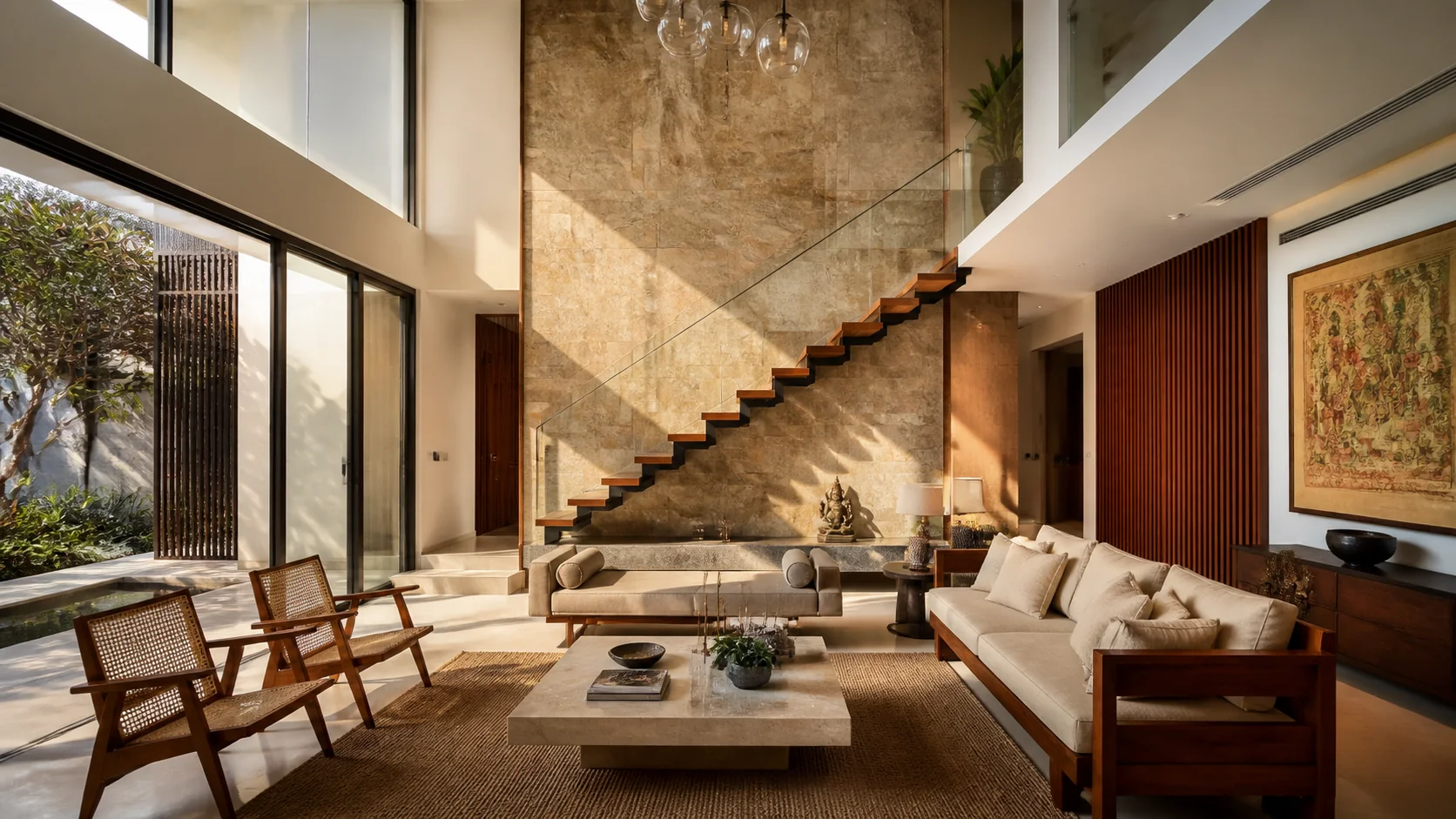
Luxury interior design is easy to imitate in a mood board. Natural stone, veneer, sculptural lighting and custom furniture can make almost any presentation look premium. The real difference appears later: whether the planning fits the household, whether details meet cleanly on site, whether materials are authentic and suitable, and whether dozens of vendors deliver one coherent result.
For homeowners comparing luxury interior designers in Jubilee Hills, the right question is not “who has the most glamorous portfolio?” It is “who can translate a complex brief into a documented, buildable home and protect the quality through execution?”
Define What Luxury Means to You
Luxury may mean rare material and artistic expression, but it can also mean privacy, acoustic comfort, thoughtful storage, precise light control and a home that is easy to maintain. A family that entertains often needs a different plan from one that values quiet evenings and art. A multigenerational villa needs accessibility, lift and service circulation decisions that an apartment may not.
Write a brief around experiences: how guests arrive, where formal and family living separate, whether cooking is open or enclosed, how staff and service routes work, what collections need display, and how bedrooms should feel. This gives the designer something deeper to solve than a list of styles.
Look for Design Depth, Not One Signature Look
A strong portfolio should show more than repeated palettes and fashionable details. Study the plans behind the photographs. Are furniture groups scaled to the architecture? Does daylight influence the layout? Are storage, doors, vents and controls integrated? Do different homes respond to different clients, or does every project resemble the studio's showroom?
Ask to see a complete case study from concept to finished site. Early options, material development, technical drawings and construction photographs reveal how the team thinks. Finished images alone cannot show whether the process was rigorous.
Evaluate the Team Behind the Principal Designer
Premium projects involve architecture, interiors, lighting, electrical, plumbing, air-conditioning, automation, acoustics, landscape, kitchen, styling and specialist fabrication. The principal may set creative direction, while project architects, designers and site managers handle daily coordination. Understand who will attend meetings, issue drawings, answer site questions and approve samples.
Ask how many active projects the lead team manages and how decisions are recorded. A talented designer with insufficient project bandwidth can create delays that no beautiful concept compensates for.
Documentation Is a Luxury Service
Good documentation protects design quality. A premium project should move beyond 3D views into dimensioned plans, elevations, sections, joinery details, reflected ceiling plans, electrical layouts, material schedules and coordinated service drawings. Mock-ups may be necessary for complex stone joints, metal finishes, fluted surfaces or custom furniture.
Ask what is issued before work begins and how revisions are controlled. Contractors should not be left to interpret critical details from a perspective render. The more bespoke the design, the more exact the documentation must be.
Material Knowledge Matters More Than Brand Lists
Natural stone varies in veining, porosity and structural behaviour. Veneer changes from sheet to sheet. Brass develops patina. Large-format tiles require substrate and handling discipline. Imported fabrics may have long lead times, while some beautiful surfaces are unsuitable for intense sun or wet areas. A luxury designer should explain these behaviours honestly.
Request physical samples and, for high-value natural materials, inspect the actual slabs or lots. Ask about sealing, edge details, book-matching, replacement availability and maintenance. Premium does not mean fragile by default, but it does mean choosing with full knowledge of care.
Custom Furniture and Joinery
Bespoke work creates proportion and function tailored to the architecture. It also introduces prototyping, shop drawings, finish matching and quality-control needs. Review dimensions for comfort, not only silhouette. A sculptural sofa still needs correct seat depth; a custom dining table must allow knee clearance and chair movement.
For joinery, inspect internal as well as external quality. Ask about core materials, veneer selection, finish samples, hardware, edge protection and installation method. One approved prototype or sample panel can prevent expensive disagreement later.
Lighting Should Reveal the Architecture
Luxury lighting is not a ceiling full of spots. It combines natural light, ambient layers, task illumination, art lighting and decorative fixtures while controlling glare. Ceiling, air-conditioning and sprinkler services must be coordinated so fixtures sit intentionally rather than being squeezed around vents.
Ask for lighting scenes based on use: arrival, entertaining, dining, family evening, night circulation and cleaning. Automation should make these routines simpler, with understandable controls and manual fallbacks. Complex systems that only the installer can operate are not a premium outcome.
Plan Back-of-House Spaces With Equal Care
Utility rooms, kitchens, staff areas, stores and service passages shape how smoothly a large home runs. Their storage, ventilation, durability and workflow should be resolved early. Formal spaces suffer when delivery, laundry and maintenance routes are ignored.
Similarly, plant rooms, networking racks, home automation panels and air-conditioning access need ventilation and service clearances. Concealment should never make essential equipment impossible to maintain.
Understand the Fee and Procurement Model
Luxury studios may charge a fixed design fee, a percentage of project cost, project-management fees, procurement margins or a combination. None is automatically wrong. What matters is clarity: services included, number of design stages, site visits, consultant coordination, procurement responsibility, travel, taxes and the treatment of changes.
Ask whether vendor quotations are visible, how designer discounts are handled and who owns the warranty relationship. Compare the model with our Hyderabad interior designer pricing guide. A transparent high fee can be better value than a low fee supported by unclear mark-ups.
Timeline and Long-Lead Decisions
Bespoke homes take time because design, engineering, sampling and fabrication are linked. Imported lighting, hardware, stone, furniture and automation components may have long lead times. The team should identify these items early and provide local alternatives where delay would threaten the programme.
Request a schedule showing design approvals, consultant inputs, tendering, mock-ups, ordering, site work, installation, styling and handover. Client decision dates should appear alongside contractor milestones. Late approvals can affect completion as much as site performance.
Quality Control and Handover
Ask how the studio inspects concealed work, waterproofing, services, joinery fabrication and final finishes. Site photographs, checklists and approval records provide accountability. Handover should include snag closure, warranties, equipment manuals, paint and finish references, spare material and vendor contacts.
Post-occupancy support is particularly important in a technologically complex home. Understand the defect period and who coordinates service calls after move-in.
Red Flags When Comparing Luxury Interior Designers
- A fee proposal without a precise list of deliverables and exclusions.
- Pressure to approve a style before discussing lifestyle and architecture.
- Only renders, with no examples of technical drawings or site details.
- Material claims described by adjectives instead of brands, grades or samples.
- No named project lead or clear site-review frequency.
- Unrealistic completion dates that ignore procurement and mock-ups.
- Reluctance to explain procurement margins or change-order pricing.
Questions for the First Meeting
- Which recent project is closest to our complexity, and why?
- Who will lead design and who will manage the site?
- Which specialist consultants should join the project?
- What drawings, schedules and samples are included?
- How are budget updates and client changes controlled?
- How do you select and disclose vendors?
- What happens during snagging and after handover?
For a broader comparison process, use our guide on choosing the best interior designer in Hyderabad.
Frequently Asked Questions
How early should a Jubilee Hills villa owner appoint an interior designer?
Ideally while architectural and service decisions can still be coordinated. Early appointment can prevent conflicts between structure, lighting, air-conditioning, automation and interior details.
Is imported material necessary for a luxury interior?
No. Luxury comes from design quality, suitability and execution. Indian stone, timber, craft and custom fabrication can create exceptional results when specified and detailed well.
Should I select the lowest design fee?
Compare scope and procurement model first. A fee that includes detailed documentation and active site coordination may reduce errors and changes that cost far more later.
The quietest luxury is certainty: knowing why each decision was made, how it will be built and who is accountable. If you are planning a premium apartment or villa, schedule an Interiorji consultation to discuss the brief, scope and next steps.